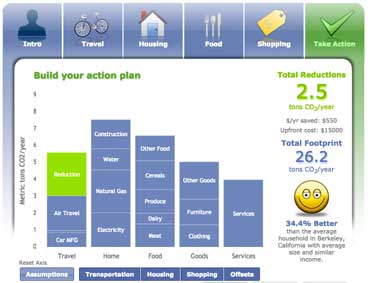
CoolClimate Calculator
Compare your household's carbon footprint to similar households
A University - Government - Business - NGO Partnership
at the University of California, Berkeley
Compare your household's carbon footprint to similar households
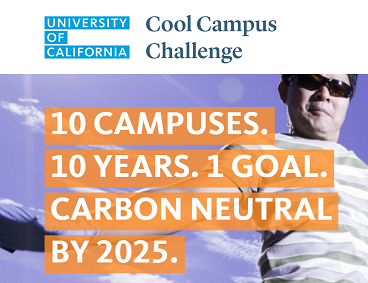
Program motivating UC students, staff and faculty toward carbon neutrality
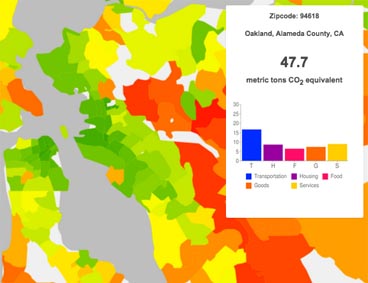
How does your neighborhood compare?
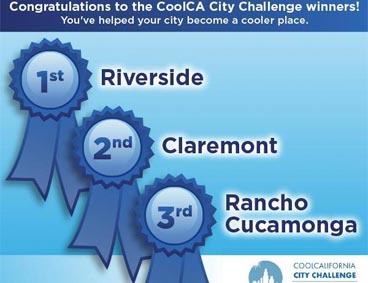
A state-wide competition to name the Coolest California City
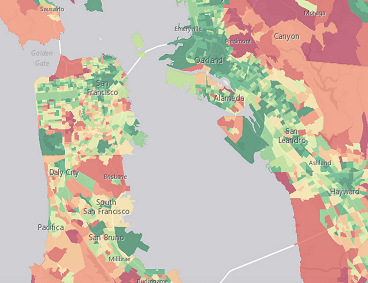
Measuring the Carbon Footprint of neighborhoods, cities and counties
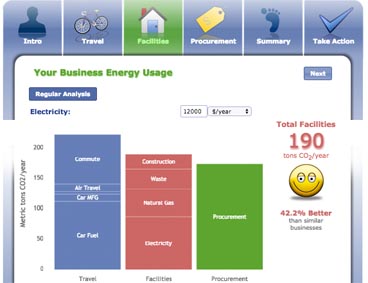
Create a personalized climate action plan for your business
Behavior, Energy and Climate Change Conference
A statewide program to engage Californians in climate action
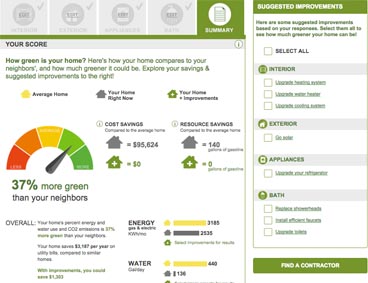
Home much energy, water and GHGs does your home produce?
CoolClimate's mission is to massively scale up the adoption of climate solutions
The climate crisis is pressing and solutions are urgently needed. CoolClimate provides smart decision-making tools and programs to accelerate the transition to a clean energy economy. We develop cutting-edge carbon footprint benchmarking research and combine this with ongoing lessons from behavioral sciences to design tailored climate solutions to different users and populations. CoolClimate tools quickly identify the unique opportunities each individual, business, organization or community holds to reduce greenhouse gas emisions. These tools are incorporated into programs to activate, educate, motivate and empower individuals and organizations to make low-carbon choices. CoolClimate also works with Network Members to design policies and programs that meet local needs and motivate populations to take climate action.